Anemone Hermit Crab
Dardanus pedunculatus
(1 Reviews)
Anemone Hermit Crab
Dardanus pedunculatus
(1 Reviews)
Anemone Hermit Crab
Size: < 2.25"
$62.99
Anemone Hermit Crab
Size: < 2.25"
$62.99
Anemone Hermit Crab - Caribbean
Size: 2.25 - 4.25"
$67.99
Anemone Hermit Crab - Caribbean
Size: 2.25 - 4.25"
$67.99
To join the waiting list, click here
Free Shipping
With
$199.00
or more in Marine Life.
More details...

Anemone Hermit Crab Care Facts
| Care Level: | Easy |
|---|---|
| Max Size: | 6 inches |
| Temperament: | Aggressive |
| Reef Safe: | With Caution |
| Diet: | Scavenger |
| Coral Safe: | With Caution |
| Invertebrate Safe: | With Caution |
| Minimum Tank Size: | 40 gallons |
Anemone Hermit Crab (Dardanus pedunculatus) offers a unique mix of movement, activity, and symbiotic behavior that brings natural reef dynamics into a home aquarium. Most aquarists appreciate their constant activity, resilience, and natural tank-cleaning ability, which provides consistent value in any setup. Because availability is often limited and demand is steady, securing a healthy specimen early can help ensure long-term success in a new or mature tank.
Appearance
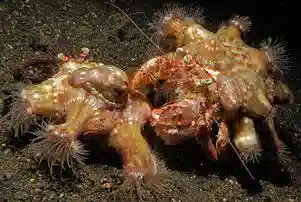
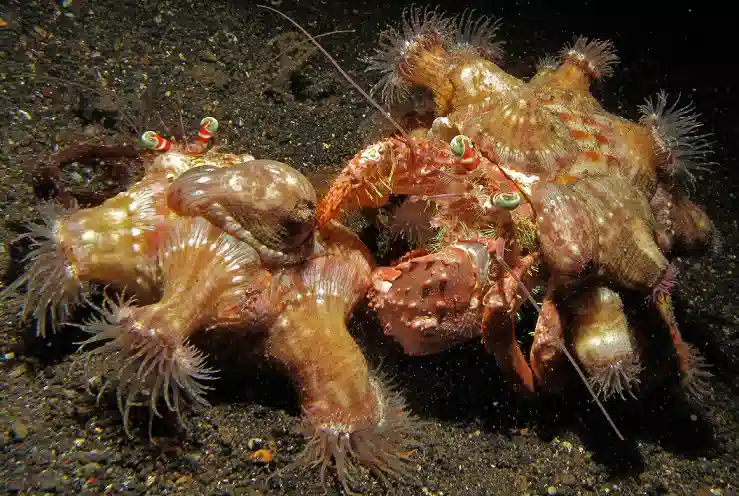
Anemone Hermit Crabs have a mottled tan and cream shell pattern with white eye stalks and a larger left claw. They often carry one or more sea anemones attached to their shell, which adds shifting texture and movement as the crab explores the tank.
Care & Requirements
This species thrives when provided a stable marine environment with consistent water quality and plenty of hiding spots. A sandy or rubble substrate helps them move naturally and anchor their shell while exploring. Their well-known mutualism with anemones occurs because the crab benefits from camouflage and stinging-tentacle protection, while the anemone gains mobility and access to food particles the crab stirs up. These crabs are active scavengers that search for detritus, algae, uneaten food, and small worms. They may show semi-aggressive behavior if food is limited or if they lack suitable anemones to carry. Supplementing their natural grazing with small meaty foods or sinking pellets helps reduce attempts to bother tank mates. Stable parameters, routine maintenance, and clean shells help support healthy anemone transfer behavior when the crab outgrows its current home.
Do anemone hermit crabs need a sand bed?
A sand or rubble bottom helps them grip as they move and supports more natural foraging.
Will they damage corals while carrying anemones?
They may knock into loosely placed corals, so secure placement is recommended if added to reef tanks.
How often should they be fed?
Small portions several times per week support stable behavior and reduce aggression.
Tank Mates & Compatibility
Anemone Hermit Crabs mix well with medium to large fish and hardy invertebrates that do not compete for shells or crawl slowly. They are best avoided with very small snails, small hermit crabs, or delicate ornamental shrimp. Providing extra shells reduces risk of conflict and keeps the crab focused on scavenging instead of competing with tank mates. Their symbiotic anemones also offer natural defense, so pairing them with peaceful fish helps maintain balance and prevents unnecessary stress.
Can anemone hermit crabs live in a reef tank?
They can, but caution is needed around small inverts and loosely placed corals.
Is it safe to keep them with snails?
They may eat very small snails, especially if hungry or lacking shells.
Do they get along with other hermit crabs?
They coexist best with larger hermits that do not compete for the same shells.
Aquaculture/Availability
Currently, captive-bred specimens are not widely available; most trade relies on wild-caught collection from Indo-Pacific habitats. The species is hardy and ships well when collected responsibly. Availability may vary with seasonal collection cycles, so securing one when in stock helps ensure consistent supply for your tank.
Are these sold with anemones already attached?
Many arrive carrying anemones, but attachments can vary.
Do captive-bred versions exist?
Not at this time, as the species is typically wild-collected.
Are wild-caught crabs harder to care for?
They adapt well once water conditions are stable and food is consistent.
FAQ
How large should a tank be for an Anemone Hermit Crab?
A 40-gallon tank provides enough space for natural movement, stable water conditions, and safe interactions with tank mates. Larger tanks help reduce aggression and improve the performance of their attached anemones.
What do Anemone Hermit Crabs eat in a home aquarium?
They eat detritus, algae, leftover food, and small meaty items such as mysis shrimp. Supplementing with sinking pellets or marine wafers helps maintain steady energy and reduces the chance they will disturb tank mates.
How often do Anemone Hermit Crabs change shells?
They switch shells when they outgrow their current one or when they find a shell with better protection. During the swap, they transfer their attached anemones by tapping them gently until the anemone reattaches to the new shell.
Are Anemone Hermit Crabs safe with corals?
They typically leave corals alone but can bump into frags or small pieces as they move. Securing coral placement prevents accidental tipping or dragging while the crab explores.
Do Anemone Hermit Crabs need specific anemone species?
They naturally pair with small symbiotic anemones found in the Indo-Pacific. In captivity, they will often maintain whatever anemone they arrive with.
Will they attack fish in the aquarium?
They do not actively hunt fish, but they may disturb slow or sleeping fish if food is scarce. Providing regular feeding and appropriate tank mates prevents unwanted interactions.
What water parameters help keep them healthy long-term?
Stable salinity between 1.023 and 1.026, temperature between 72 and 78°F, and pH between 8.0 and 8.4 support their natural behavior and reduce stress for both crab and anemones.
Do Anemone Hermit Crabs carry diseases or parasites?
They are generally hardy and not known for carrying common marine diseases. Clean shells, proper acclimation, and stable water help ensure healthy introduction.
Can I keep multiple Anemone Hermit Crabs together?
You can keep more than one if the tank is large enough and extra shells are provided. Crowding increases competition, but proper space and food help minimize conflict.
Why do they sometimes drop their anemones?
They release anemones during shell changes or when the anemone becomes damaged or unhealthy. The crab may later attach a new anemone if one becomes available.
These hermit crabs are not reef safe they can be aggressive and will eat and attack coral snails or anything not quick enough to get away from them I learned that after I put them in my tank and they started eating my coral right away ?
Reviewed by: Branden Ross on Jan. 7, 2021