Hawkfish In Saltwater Aquariums: FAQ
Hawkfish are bold, personality-filled saltwater fish, and whether they’re considered “reef safe” depends on what you keep in your reef. While hawkfish won’t harm corals, making them coral-safe, they are not always invert-safe. Their natural behavior includes perching on rockwork, hunting small crustaceans, and asserting territorial dominance, traits that make them exciting additions to many reef tanks, but not ideal for every setup.
Are hawkfish coral safe?
Yes. Hawkfish do not nip, sting, or irritate corals. They coexist safely with:
LPS corals
SPS corals
Soft corals
Zoanthids
Mushrooms and leathers
So if your primary concern is coral health, hawkfish are a great fit.
Are hawkfish invertebrate-safe?
Not always. Many hawkfish species will prey on small, mobile invertebrates.
They may eat:
Small shrimp (cleaner, peppermint, sexy shrimp)
Very small crabs
Tiny hermits
They typically ignore:
Snails
Larger crabs
Large cleaner shrimp (sometimes safe, but not guaranteed)
Best hawkfish for reef tanks:
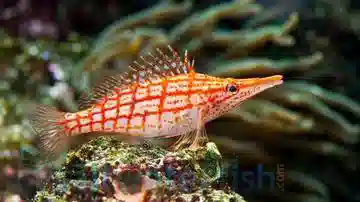
Longnose Hawkfish (the safest, least aggressive choice)
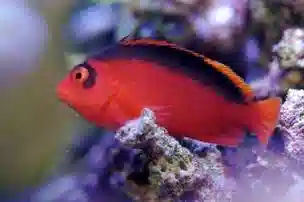
Flame Hawkfish (reef safe with caution around small shrimp)
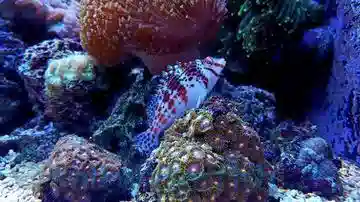
Falco Hawkfish (small but assertive)
One Saltwaterfish.com reviewer of the Falco Hawkfish shared: “This fish is a real nice addition to my tank. He swims along the sand and rock. He loves meaty food and can eat a pretty good size piece of food for his size. He does not bother other fish and no one seems to mind he is there either. Seems to be hardy so it should do just fine in the aquarium.”
Pro reef tips for keeping hawkfish:
Add hawkfish last: they are territorial once established.
Avoid very small shrimp unless you’re prepared for risk.
Provide lots of rock “perch” spots to reduce aggression.
Keep them well-fed to reduce hunting behavior.
- Use a secure lid: hawkfish can jump when startled.
Bottom line:
Hawkfish are coral-safe and make excellent additions to many reef tanks, but they may prey on small shrimp and other tiny inverts. Choose species like the Longnose Hawkfish for the safest compatibility and add hawkfish to a well-established reef with sturdy tankmates. To find healthy, responsibly sourced hawkfish backed by Saltwaterfish.com’s 8-Day Live Guarantee, explore the Hawkfish Collection and choose the perfect addition for your aquarium.
Yes, hawkfish are completely safe with corals and anemones, making them a great choice for many reef tanks. While hawkfish are known for their bold personalities and predatory instincts toward very small inverts, they do not harm coral tissue, nip at polyps, or disturb anemones. Their perching behavior and active hunting style add character to a reef without threatening its primary sessile inhabitants.
Why hawkfish are coral-safe:
They do not eat or damage any type of coral
Their perching behavior doesn’t irritate coral tissue
They won’t sting, nip, or smother LPS, SPS, soft corals, or zoanthids
They thrive in the same stable reef parameters that corals require
This makes hawkfish suitable for tanks with:
Soft corals (zoanthids, leathers, mushrooms)
LPS (hammers, torches, acans, favias)
SPS (montipora, acropora, birdsnest)
Encrusting and plating corals
Are hawkfish safe with anemones?
Yes, hawkfish generally ignore anemones entirely.
They won’t sting anemones or be harmed by them
They don’t compete with clownfish for hosting
They rarely perch on anemones because they prefer solid rock and branches
The only caution: a very small hawkfish could be eaten by a large, hungry carpet anemone but this is extremely rare and usually only happens in predator tanks.
One Saltwaterfish.com reviewer of the Longnose Hawkfish shared: “Received two healthy hawkfish today with vibrant color. Love it. Wouldn't regret getting a pair.”
What hawkfish aren’t safe with:
Small shrimp (cleaner, peppermint, sexy shrimp)
Tiny hermits
Small crabs
Very small fish (in rare cases)
Pro reefkeeping tips for hawkfish:
Add hawkfish last to reduce territorial behavior.
Provide lots of rock perches: they love to sit and watch the tank.
Keep the tank covered: hawkfish are strong jumpers.
- Feed a varied diet (mysis, krill, marine pellets) to reduce hunting behavior.
Bottom line:
Hawkfish are fully coral- and anemone-safe, making them excellent additions to mixed reefs. Their only risk is toward small mobile inverts, not corals or anemones. For healthy, conditioned hawkfish backed by Saltwaterfish.com’s 8-Day Live Guarantee, explore the Hawkfish Collection and add a colorful, personality-filled fish to your reef with confidence.
Hawkfish are some of the most interactive, personality-filled fish you can add to a saltwater aquarium. Known for their signature “perching” posture, confident demeanor, and hunting instincts, hawkfish quickly become centerpieces of any tank they inhabit. Their behavior is unique, entertaining, and often comical, but it also comes with certain quirks that reef keepers should understand before adding one.
What you can expect from hawkfish behavior:
Perching & Observing
Hawkfish love to perch on rocks, corals, powerheads, and even return nozzles.
They sit and “watch” the tank like tiny predators.
This behavior is natural and harmless to corals.
Bold, Confident Movement
Unlike shy reef fish, hawkfish are outgoing.
They’ll often follow you around the tank.
They swim in short bursts between perches instead of cruising constantly.
Curiosity & Personality
Hawkfish interact with their environment more than many fish.
They inspect new additions
They may beg for food
They often become “pet-like” in behavior
Territorial Tendencies
Hawkfish can be assertive, especially toward new or smaller fish.
Best added last to the tank
May chase small gobies or timid fish
Usually peaceful with medium-sized, confident tankmates
Predatory Instincts
They naturally hunt small crustaceans.
Tiny shrimp, sexy shrimp, and very small hermits may be eaten
Larger shrimp (like adult cleaners) may coexist but are never guaranteed safe
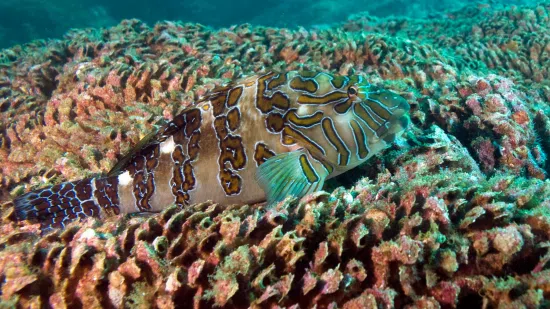
One Saltwaterfish.com reviewer of the Geometric Pygmy Hawkfish shared: “I am very pleased with this beautiful little fish, he hides among the rocks but does not bother my corals or other invertebrates , so far, lol.”
Active Feeding Behavior
Hawkfish are enthusiastic eaters.
They dart after mysis, pellets, and meaty foods
A well-fed hawkfish is less likely to hunt inverts
Jumping
Hawkfish are strong jumpers when startled.
A tight-fitting lid is essential to prevent escape incidents
Pro tips for managing hawkfish behavior:
Add them last to reduce territorial issues.
Provide multiple rock perches; this reduces aggression.
Keep them well-fed to limit predation on small inverts.
Avoid very small tankmates that may be seen as prey.
Secure your tank lid. Hawkfish do jump.
Bottom line:
Expect a hawkfish to be active, bold, curious, and highly entertaining. They add tons of personality to a reef tank, perching and surveying their territory while coexisting peacefully with corals and most fish. Just be mindful of very small shrimp and timid tankmates. For healthy, conditioned hawkfish backed by Saltwaterfish.com’s 8-Day Live Guarantee, explore the Hawkfish Collection and enjoy a fish that brings real character to your aquarium.
Hawkfish are hardy, resilient saltwater fish known for their bold personalities, and with the right care, they can live 5–10 years in a home aquarium. Their longevity is closely tied to water quality, stable parameters, proper tankmates, and a diet rich in meaty foods. While some individuals may live beyond the 10-year mark, most hobbyist tanks see an average lifespan of 7–8 years when care is consistent and stress is minimized.
What influences hawkfish lifespan?
Stable water parameters
Hawkfish thrive when salinity, temperature, and pH remain consistent. Sudden swings shorten lifespan. Ideal ranges include:
Temperature: 75–78°F
Salinity: 1.024–1.026
pH: 8.1–8.4
Like many reef animals, stability is more important than chasing “perfect” numbers.
Proper diet
Hawkfish are carnivores with high metabolisms. A varied diet of mysis shrimp, krill, marine pellets, and chopped seafood supports:
Strong immune function
Vivid coloration
Long-term vitality
Feeding 1–2 times daily helps prevent stress-related decline.
Tank size & environment
Most hawkfish need 30–50 gallons minimum, with larger species (like Longnose Hawkfish) doing best in 55+ gallon setups.
Provide rock ledges for perching
Keep a secure lid. Hawkfish jump
Add them last to minimize territorial aggression
Tankmates
Choose peaceful or semi-aggressive fish of similar size. Avoid extremely timid fish or tiny shrimp, which hawkfish may view as prey.
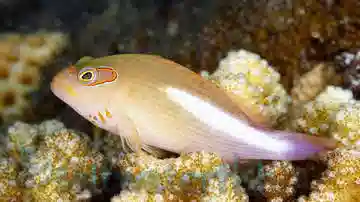
One Saltwaterfish.com reviewer of the Arc Eye Hawkfish shared: “What a beautiful Fish\! The images on the website do not do this marine life justice. The Arc Eye Hawkfish was hungry and ate right away.”
Pro tips to maximize hawkfish lifespan:
Maintain consistent weekly water changes
Feed a high-protein, varied diet
Avoid copper exposure in reef systems
Ensure plenty of perching spaces to reduce stress
Keep tank covered at all times
Bottom line:
With proper care, hawkfish commonly live 5–10 years in captivity, rewarding reef keepers with bold personality, constant activity, and hardy behavior. For healthy, conditioned hawkfish backed by Saltwaterfish.com’s 8-Day Live Arrival Guarantee, explore the Hawkfish Collection and bring home a long-lived showpiece for your aquarium.
Yes, hawkfish are known jumpers, especially when startled or when establishing territory. Their powerful, darting movements and curious nature make them more prone to leaping than many other reef-safe fish. Even though they prefer to perch on rocks and coral branches, hawkfish can launch themselves several inches out of the water, particularly during feeding, sudden lighting changes, or when chased by another fish.
Why hawkfish jump:
Startle response from sudden movement or bright light
Aggression or territorial disputes with tankmates
Chasing food at the surface
Exploring open edges or gaps near plumbing
Stress from improper water conditions: because of this natural behavior, a secure top is essential for long-term hawkfish safety, even if your fish “has never jumped before.”
How to prevent hawkfish from jumping:
Use a tight-fitting lid
The \#1 protection. Choose:
Mesh screen lids (1/4" openings or smaller)
Acrylic or polycarbonate lids
Custom-fitted tank covers
Avoid glass lids for reef tanks unless ventilation is addressed. They trap heat and limit oxygen.
Cover all openings
Hawkfish can jump through surprisingly small gaps. Seal:
Overflow gaps
Light-mount cutouts
Return line openings
Corners or uneven trim spaces
Provide plenty of perching spots
Hawkfish jump less when comfortable. Rock ledges, branches, and open perches help them feel secure and reduce sudden darting.
Reduce sudden stress triggers:
Keep lighting transitions smooth with ramp-up modes
Feed consistently to reduce frantic behavior at the surface
Avoid aggressive tankmates that may chase or corner them
Maintain stable water parameters
One Saltwaterfish.com reviewer of the Flame Hawkfish shared: “Doing well. Beautiful color and interesting facial expression.”
Pro hawkfish safety tips:
Always assume your hawkfish can jump, even smaller species like the Falco Hawkfish
Add hawkfish last, as they become territorial when established
Consider mesh tops over egg crate; egg crate openings are too large
Check lid fit regularly after maintenance
Bottom line:
Hawkfish absolutely can and do jump, and a secure, fully covered tank is essential to keeping them safe. By using a tight-fitting lid, sealing small openings, and reducing stress triggers, you can enjoy your hawkfish’s bold personality without risk. For healthy, conditioned hawkfish backed by Saltwaterfish.com’s 8-Day Live Guarantee.
Choosing the right tank size is one of the most important decisions when keeping a hawkfish. These bold, perching predators are active, curious, and surprisingly territorial, which means they need enough space to explore, hunt, and claim perches without becoming stressed or aggressive. While hawkfish are hardy and adaptable, providing the appropriate tank size significantly improves their lifespan, behavior, and overall health.
Minimum tank size recommendations by species:
Falco Hawkfish: 30 gallons minimum — small but still energetic and territorial
Flame Hawkfish: 40–50 gallons — benefits greatly from extra rockwork and swimming room
Arc Eye Hawkfish: 50 gallons — more active and assertive
Longnose Hawkfish: 55 gallons minimum — highly active swimmer, appreciates open water space and branching rock
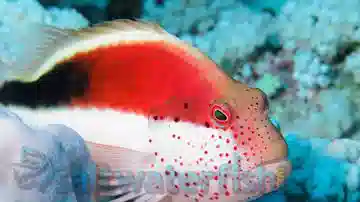
Freckled Hawkfish & other larger species: 70–90+ gallons
While smaller tanks are sometimes recommended online, hawkfish thrive best in spacious systems that allow multiple perches and reduce territorial behavior.
Why tank size matters for hawkfish:
Territorial nature: Larger tanks prevent aggression toward timid tankmates.
Perching behavior: Rock structures, caves, and ledges require adequate space.
Activity level: Hawkfish do short “burst swims” between perches and patrol the tank.
Compatibility: More room means more fish options and safer community dynamics.
One Saltwaterfish.com reviewer of the Pixy Hawkfish shared: “I had never purchased fish for my aquarium online before and I was thrilled when the Pixy Hawkfish arrived and very healthy.”
Pro tank-planning tips:
Choose tanks with ample horizontal swimming space.
Create several perches at different heights to spread out territory.
Use a tight-fitting lid: hawkfish are strong jumpers.
Add hawkfish last to avoid territorial disputes.
Pair with medium-sized, confident tankmates for best behavior.
Bottom line:
The best tank size for a hawkfish is typically 40–55 gallons or larger, depending on the species. More space leads to better behavior, less aggression, and a healthier, longer-lived fish. For healthy, conditioned hawkfish backed by Saltwaterfish.com’s 8-Day Live Guarantee.
Hawkfish are active, carnivorous predators with big personalities and equally big appetites. In the wild, they perch on reef ledges and ambush small crustaceans and fish. In captivity, they thrive on a varied, protein-rich diet that mimics their natural feeding behavior. Offering the right mix of frozen, prepared, and live foods not only improves their coloration and energy but also reduces territorial aggression and helps them integrate more peacefully with tankmates.
Best foods for hawkfish (daily diet):
Frozen mysis shrimp – a staple that boosts color and immune health
Frozen krill – great for larger hawkfish like Flames and Longnose
Chopped shrimp or scallops – high protein and easy to portion
Marine carnivore pellets – good for consistency and nutrient variety
Brine shrimp (enriched) – use as an occasional treat, not a staple
Recommended live foods (excellent enrichment):
Live ghost shrimp – stimulates natural hunting instincts
Live feeder guppies or mollies (gut-loaded; only occasionally)
Copepods and amphipods – ideal for smaller hawkfish varieties
Live blackworms – high in protein and irresistible to finicky eaters
Live foods should be used sparingly. They're best for new arrivals, picky eaters, or as occasional enrichment to encourage natural behavior.
One Saltwaterfish.com reviewer of the Freckled Hawkfish shared: “The first Freckled Hawkfish arrived DOA but they refunded me quickly and the second one arrived and I could not be happier. Grateful for the good service and the speed they replaced the DOA.”
Pro hawkfish feeding tips:
Feed 1–2 times daily; they are active hunters with fast metabolisms.
Vary the diet: hawkfish stay healthier and more colorful with rotation.
Use tongs or target feeding to make sure the hawkfish gets its share.
Keep them well-fed to minimize predatory interest in small shrimp.
Thaw frozen foods fully and rinse them to reduce excess phosphates.
- For picky hawkfish, start with live food and gradually transition to frozen.
Bottom line:
Hawkfish thrive on a diverse, high-protein diet that includes mysis shrimp, krill, marine pellets, and occasional live foods to promote natural hunting behavior. With regular, varied feeding, they become hardy, colorful, and interactive centerpieces in your reef. For healthy, conditioned hawkfish backed by Saltwaterfish.com’s 8-Day Live Guarantee.
Hawkfish are compact, hardy reef fish, but they can grow larger than many hobbyists expect. Most species reach 3–5 inches in captivity, while the larger varieties can grow up to 5–7 inches, making them medium-sized additions that need adequate space, rockwork, and stable water conditions. Their size, combined with their bold personalities, makes them prominent centerpieces in many reef and FOWLR systems.
Typical sizes of popular hawkfish species:
Flame Hawkfish: 3–4 inches
Longnose Hawkfish: 5–6 inches (one of the largest commonly kept species)
Falco Hawkfish: 2.5–3 inches (a smaller, compact species)
Scarlet / Red Hawkfish: 4–5 inches
Pixy (Coral) Hawkfish: 3–4 inches
These sizes reflect full adult growth in healthy home aquariums. With proper feeding, stable parameters, and room to perch and explore, most hawkfish reach their maximum size within 2–3 years and maintain that size for many years in captivity.
What influences hawkfish growth:
Tank size: Larger species benefit from 50–75+ gallons, while smaller hawkfish can thrive in 30+ gallons.
Diet: High-protein foods like mysis shrimp, krill, pellets, and chopped seafood support proper growth and vibrant color.
Water quality: Stable salinity, temperature, and low nutrient swings help hawkfish maintain long-term health.
Territory availability: Rock ledges, caves, and perches allow natural behavior, reducing stress that can stunt growth.
One Saltwaterfish.com reviewer of the Flame Hawkfish shared: “Fish came in healthy has great personality and seems friendly with all my fish.”
Pro tips for supporting healthy growth:
Feed once or twice daily with varied meaty foods.
Provide multiple perching areas to reduce territorial disputes.
Keep a secure lid. Larger hawkfish are strong and may jump when startled.
Add hawkfish last to minimize bullying and stress-related growth issues.
Ensure consistent water changes to maintain stability.
Bottom line:
Most hawkfish grow to 3–5 inches, with some species reaching 6–7 inches in well-maintained aquariums. Their moderate size and bold, charismatic behavior make them standout additions to both reef and FOWLR tanks. For healthy, conditioned hawkfish backed by Saltwaterfish.com’s 8-Day Live Guarantee.
Keeping multiple hawkfish in the same tank is possible but challenging, and in most home aquariums, it is not recommended. Hawkfish are naturally territorial, perch-dwelling predators that claim specific rock ledges as their personal “watch spots.” When more than one hawkfish is introduced into a typical tank, this territorial instinct often leads to aggression, chasing, and stress, especially if the tank is under-sized or lacks enough perching zones.
*When multiple hawkfish can work:
Large tanks (125+ gallons): More space reduces territorial overlap.
Different species with different body shapes: Pairing a Longnose Hawkfish with a smaller Flame or Falco can sometimes work because they perceive each other differently.
Simultaneous introduction: Adding them at the same time prevents one hawkfish from establishing dominance first.
Rich rockwork with many perching spots: Ledges, branches, and caves help divide territory.
Even with these conditions, success is not guaranteed. Hawkfish have strong personalities and individual behavior varies.
When keeping multiple hawkfish is not recommended:
Small tanks (under 75 gallons)
Two of the same species
Two males (behaviorally impossible in most cases)
Aggressive species like Scarlet or Pixy Hawkfish
In these situations, hawkfish will usually fight until one is injured or forced into hiding.
One Saltwaterfish.com reviewer of the Arc Eye Hawkfish shared: “Received in very healthy condition.”
Pro tips if you want to attempt multiple hawkfish:
Choose Longnose Hawkfish as one of the pair, they are the most tolerant.
Provide abundant perching spots using branching rock or SPS skeletons.
Add both hawkfish at the same time to neutralize territorial advantage.
Avoid pairing two bold species like Flames or Scarlet Hawkfish.
Monitor closely for the first few weeks; aggression happens fast.
- Keep a backup plan (like an acclimation box or secondary tank) ready.
Bottom line:
Multiple hawkfish can coexist only in large, thoughtfully aquascaped tanks, and even then, compatibility is not guaranteed. In most home aquariums, hawkfish are best kept one per tank to avoid aggression and ensure long-term success. For healthy, conditioned hawkfish backed by Saltwaterfish.com’s 8-Day Live Guarantee, explore the Hawkfish Collection and choose the best single standout for your reef.
Hawkfish are bold, entertaining additions to reef tanks, and while they’re generally hardy and adaptable, their compatibility with other reef fish depends on tank size, tankmates, and the hawkfish species you choose. They are confident perchers with strong personalities, so understanding their behavior helps ensure a peaceful, thriving community aquarium.
Great tankmates for hawkfish:
These species tolerate the hawkfish’s assertive nature and typically coexist without issues:
Tangs & Surgeonfish – fast, confident swimmers
Large Wrasses – such as Melanurus, Yellow Coris, or Fairy wrasses
Dwarf Angelfish (Coral Beauty, Flame, Potter’s)
Clownfish – hardy and semi-aggressive enough to hold their ground
Rabbitfish & Foxfaces – peaceful but large-bodied
Blennies – most mid-sized species do fine
Cardinalfish – usually peaceful coexistence
Anthias – active swimmers, not easily intimidated
These fish are typically too large or too quick to be viewed as prey.
Tankmates to avoid or use caution with:
Very small gobies (Clown Goby, Trimma, Eviota)
Small dottybacks
Firefish – may be bullied due to timid nature
Small Chromis – can be chased if shy
Tiny juvenile fish – could be viewed as prey
Hawkfish may chase or peck at timid or very small fish, especially in smaller tanks.
Invertebrates at risk:
Although coral-safe, hawkfish often prey on small, mobile inverts:
Sexy shrimp
Peppermint shrimp
Cleaner shrimp juveniles
Very small hermits
Snails and larger shrimp are usually safer but never guaranteed.
One Saltwaterfish.com reviewer of the Red Spotted Hawkfish shared: “The Red Spotted Hawkfish was received in great shape and has added life to my saltwater aquarium. Thanks.”
Pro tips for ensuring compatibility:
Add hawkfish last so they don’t claim the entire aquascape as territory.
Choose Longnose Hawkfish for the best compatibility; they’re the most peaceful of the group.
Provide lots of rock ledges and perching zones to reduce competition.
Avoid overcrowding: hawkfish become more territorial when space is limited.
- Keep a secure lid: startled hawkfish may jump when chased or chasing.
Bottom line:
Hawkfish are compatible with a wide range of reef fish, especially mid-sized and confident species like tangs, wrasses, angelfish, and clownfish. Avoid very small or timid fish, and expect some territorial behavior. With proper tankmates and environment, hawkfish become charismatic, long-lived showpieces in a reef tank. For healthy, conditioned hawkfish backed by Saltwaterfish.com’s 8-Day Live Guarantee.
Hawkfish are beloved for their bold personalities, perching behavior, and hardy nature, but some species are far better suited for home aquariums than others. The best hawkfish for most reef keepers are those that balance vibrant color, manageable size, and predictable temperament, making them ideal for both beginner and advanced aquarists. These standout species adapt well to community reefs, accept a wide range of foods, and exhibit the classic “hawkfish charm” without excessive aggression.
Top hawkfish for home aquariums:
1\. Flame Hawkfish (Neocirrhites armatus)
One of the most popular species thanks to its fiery red coloration and outgoing personality.
Reaches 3–4 inches
Hardy, active, and entertaining
Excellent for both FOWLR and mixed reefs
May eat small shrimp, but otherwise very manageable
2\. Longnose Hawkfish (Oxycirrhites typus)
Considered the most peaceful hawkfish and the best choice for community reefs.
Reaches 5–6 inches
Distinctive pattern and slender body
Less aggressive than most hawkfish
Often safe with larger shrimp
3\. Falco Hawkfish (Cirrhitichthys falco)
A smaller, budget-friendly hawkfish perfect for modest-sized tanks.
Grows to about 2.5–3 inches
Feisty but usually not overly aggressive
Ideal for aquariums 30 gallons and larger
4\. Pixy/Coral Hawkfish (Cirrhitichthys oxycephalus)
Beautiful, compact, and hardy. Great for home aquariums with plenty of rockwork.
Typically 3–4 inches
Active perchers that love branching corals and rock ledges
One Saltwaterfish.com reviewer of the Falco Hawkfish shared: “This guy was roaming around the rocks and exploring the moment we put him in. Very active and adorable. He shares rock perches with the lawnmower blenny. We have lots of small crabs and snails and he hasn't given any of them a second glance. The amphipods on the other hand...I guess they're too tasty to resist. ;)”
Why these species stand out:
Manageable adult sizes
Strong adaptability to captive diets
Classic perch-and-watch behavior
Excellent coloration
Hardy and easy to acclimate
Suitable for most mixed reef environments
Pro tips for choosing the best hawkfish:
Pick a Longnose Hawkfish for maximum community compatibility
Select a Falco for smaller tanks
Choose a Flame Hawkfish if you want a bold, eye-catching showpiece
Provide multiple perching spots to reduce aggression
Add hawkfish last to minimize territorial issues
Bottom line:
The best hawkfish for home aquariums are the Flame, Longnose, Falco, and Pixy Hawkfish. All are hardy, colorful, and full of personality. With the right tankmates and aquascape, these species become charming, long-lived centerpieces. For healthy, conditioned hawkfish backed by Saltwaterfish.com’s 8-Day Live Guarantee.
Hawkfish have earned the title of “personality fish” because they bring more character, curiosity, and interaction to a reef tank than almost any other small marine species. Their bold movements, intelligent behavior, and unmistakable perching habits make them feel almost aware of their surroundings and of you. Many reef keepers find that hawkfish quickly become one of the most entertaining and expressive fish in their aquarium.
What makes hawkfish a true personality fish?
1\. Their signature perching behavior
Hawkfish sit on rock ledges, coral branches, pumps, and overflow boxes as if they’re “guarding” the tank.
They watch everything around them
Their posture and head movements give them an alert, almost bird-like appearance
This unique behavior is unlike any other reef fish.
2\. Curious and interactive nature
Hawkfish often recognize their owners and come to the front of the tank during feeding or maintenance.
They follow your movements
They beg for food
They investigate new additions
Their awareness gives them a pet-like charm.
3\. Bold but not overly aggressive
While they may defend their perch or show dominance, hawkfish are typically confident, not shy.
They adapt quickly
They rarely hide
They show distinct behaviors and “attitude”
Each hawkfish truly develops its own personality.
4\. Active hunters with flair
Hawkfish are ambush predators, and watching them hop from perch to perch and dart after food is highly entertaining. Their hunting style is energetic, precise, and full of character.
One Saltwaterfish.com reviewer of the Flame Hawkfish shared: “Fish arrived healthy and well packaged.”
5\. Constantly “involved” in tank life
Unlike many reef fish that swim in set patterns, hawkfish:
Patrol the tank
Watch tankmates
Guard preferred territories
Perch and observe like tiny sentinels
Their awareness gives them a personality far beyond most small reef species.
Pro tips for enjoying your hawkfish’s personality:
Provide multiple rock ledges and perches to encourage natural behavior
Keep them well-fed to reduce predatory instincts toward small shrimp
Add them last so their confidence doesn’t become territorial bullying
Use a lid: their boldness sometimes leads to jumping when startled
Bottom line:
Hawkfish are called “personality fish” because they are curious, expressive, interactive, and full of behavior that stands out from typical reef species. They don’t just live in your tank, they engage with it. For healthy, conditioned hawkfish backed by Saltwaterfish.com’s 8-Day Live Guarantee, explore the Hawkfish Collection and bring home a fish that truly adds character to your reef.